


Subham Dutta
The Fractured ‘I’: Nationalism, Irish Cultural Politics and the Quest for a Unified Poetic Self in the Letters of W. B. Yeats (1892–1939) © 2026 by Subham Dutta is licensed under CC BY-NC 4.0


Abstract
Letters have an important role in unravelling various forms of negotiations operative within the self of a poet. This paper intends to show how Yeats’s letters intrinsically bear on his poetic as well as political life. The first-person narrator that Yeats uses in his letters is a polyvalent one that constantly re-positions itself vis-à-vis the changing political and cultural milieu of Ireland. The aim of this paper is to situate the subjective ‘I’ of Yeats’s letters in the changing matrix of Ireland’s cultural and political context and thereby to bring out the intersectionality of his personal, political and poetic selves. Yeats’s letters, with their inherent open-endedness, unfold different possibilities of self-making within Yeats’s poetic oeuvre and thereby challenge the possibility of a uniform, straightforward, ideologically convenient paradigm of biographization.
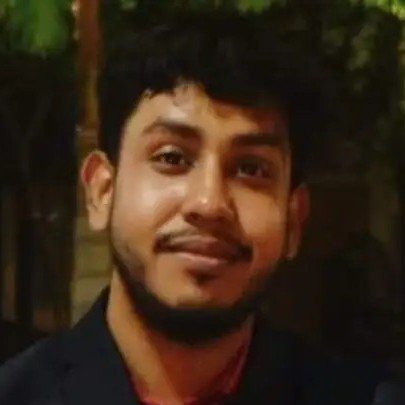 |
Subham Dutta is an Assistant Professor of English at Gokhale Memorial Girls’ College, affiliated to Calcutta University. He completed his PhD on Sri Aurobindo’s Dramatic Works from Visva-Bharati, Santiniketan in 2021.
|
MLA Citation:

 DOWNLOAD PDF