


Samara Rehman
Carthage as Model Empire in Early-Nineteenth Century Britain: A Critical Analysis of J.M.W. Turner’s Carthaginian Paintings © 2025 by Samara Rehman is licensed under CC BY-NC 4.0


Abstract
This paper explores one of the most prominent British Romantic painters J.M.W. Turner’s (1775-1851) engagement with the ancient maritime empire of Carthage as a lens through which early nineteenth-century Britain negotiated its own imperial identity. The imagery of rise and fall of empires carried great symbolic import for a nation which had newly become the globally dominant empire post the Battle of Waterloo (1815) after defeating Napoleonic France. Drawing parallels between the British empire and the great historic empires was an established tradition during Turner’s time, inspired as it was with the search for an exemplary past which could instruct Britain’s present hegemony and future aspirations for longevity. The paper argues that such a search for historical continuities influenced Turner, whose paintings of the erstwhile thalassocracy of Carthage participated in the cultural discourse of his time. Principally considering the two paired paintings Dido building Carthage; or the Rise of the Carthaginian Empire (1815) and The Decline of the Carthaginian Empire (1817), it posits that Turner uses Carthage both as an inspirational model and an exemplary tale cautioning against imperial decadence. Within the larger British intellectual imagination, Carthage was also invoked by women poets like Anna Laetitia Barbauld (1743-1825) and Letitia Elizabeth Landon better known as L.E.L. (1802-1838) to reflect upon ideas of moral decline, imperial ambition, and the costs of war. By situating Turner within the broader geopolitical, social, and cultural context, this paper highlights how Carthage became a loaded metaphor replete with ambivalence and shifting significance. Turner’s distinctive attention to the maritime nature of Carthage serves as a meditation on his own country’s ocean-bound imperial trajectory, raising the question of whether maritime supremacy and imperialist expansion contain within them the seeds of their own destruction.
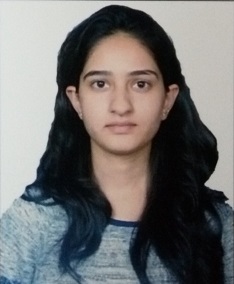 |
Samara Rehman is a doctoral researcher in the English Department at the University of Delhi. Her thesis offers an art-historical analysis of J.M.W. Turner’s maritime paintings, grounding them in the socio- historical experience of the long nineteenth century. |
MLA Citation:

 DOWNLOAD PDF